

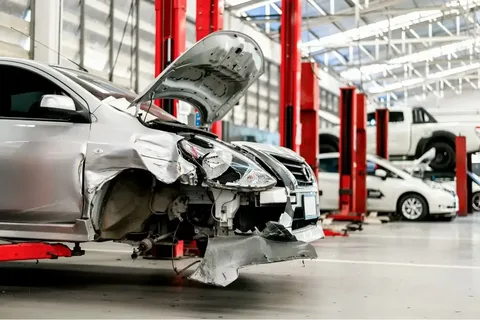
If your airbags deployed during a car accident, repairing the visible body damage is only part of the process. The vehicle’s restraint system, which includes airbags, seat belts, sensors, and electronic control components, also needs attention before the car returns to the road.
Airbag deployment changes how a collision repair assessment is carried out. The repair plan must account for the activated safety equipment, related components, and any structural damage caused by the impact.
For Los Angeles drivers, understanding what OEM-certified collision repair involves after airbag deployment helps you make informed decisions about the inspection, repairs, and questions to ask your collision center.
What Happens to Your Vehicle When Airbags Deploy?
Airbags are part of the Supplemental Restraint System (SRS), which works alongside seat belts to help protect occupants during certain collisions.
When a crash meets the system’s deployment conditions, the vehicle’s control system activates the appropriate airbags. Depending on the vehicle and the direction of impact, this can involve front, side, curtain, or knee airbags.
According to the National Highway Traffic Safety Administration (NHTSA), deployed airbags cannot be reused and must be replaced before the vehicle is driven again.
Deployment also prompts an inspection of other restraint system components. The exact replacement requirements depend on the vehicle’s manufacturer, model, equipment, and which devices activated.
Importantly, airbag deployment does not automatically mean the vehicle is beyond repair. Its repairability requires an assessment of the collision damage and the work needed to restore it.
Why OEM Repair Procedures Matter After Airbag Deployment
OEM stands for Original Equipment Manufacturer. Vehicle manufacturers develop repair procedures that explain how specific components must be inspected, replaced, installed, and tested after an accident. This is particularly important when airbags deploy because restraint systems are designed around the vehicle’s structure, seating positions, sensors, and electronic controls.
A collision center must consult the current manufacturer instructions rather than assume the same repair procedure applies to every vehicle.
What Should Be Inspected After Airbag Deployment?
1. Deployed Airbags and Related Components
Every deployed airbag needs replacement. However, the inspection does not stop with the airbag module itself.
Depending on where deployment occurred, the vehicle’s repair instructions can require examination or replacement of the steering wheel, dashboard, seat assemblies, or other related components. For example, a passenger-side front airbag can damage the dashboard during deployment, while a curtain airbag can affect the headliner and pillar trim.
These parts must be evaluated according to the manufacturer’s requirements rather than repaired solely for their appearance.
2. Seat Belts and Pretensioners
Seat belt pretensioners are designed to tighten the belt during certain collisions. They can activate alongside airbags or independently, depending on the crash.
After deployment, the collision repair plan must identify which pretensioners activated and which seat belt assemblies require replacement. Technicians also examine applicable seat belt anchors, retractors, buckles, and mounting locations for damage.
The exact inspection and replacement requirements differ between vehicles. That is why I-CAR’s OEM restraint-system repair resources direct repair professionals to manufacturer-specific information.
3. Crash Sensors and Airbag Control Modules
Modern restraint systems use sensors and electronic modules to detect crash conditions and manage deployment. Following an accident, technicians need to assess the relevant sensors, mounting brackets, wiring, connectors, and restraint control module according to the vehicle manufacturer’s instructions.
Some manufacturers require replacement of specific sensors or modules after deployment, while others specify inspections, diagnostic procedures, or additional replacement conditions.
A diagnostic scan helps identify recorded system faults, but clearing a warning light does not replace the required physical inspections or component replacement procedures.
4. Interior Panels and Airbag Mounting Areas
Airbag deployment can affect interior components around the installation location. This can include the steering wheel cover, dashboard, seatback, headliner, and pillar trim. Technicians check the relevant components for deformation, damaged mounting points, and other collision-related problems.
When these parts require replacement, the correct components and installation procedures are important for maintaining the intended restraint system configuration.
5. Structural Damage Around the Impact Area
Airbag deployment also makes it important to understand the extent of the original collision damage. Technicians inspect the affected body and structural areas for deformation, damaged attachment points, or movement outside manufacturer specifications.
For example, a frontal impact can affect the front rails, reinforcement components, and surrounding structural sections. A side impact can involve door openings, pillars, and other load-bearing areas.
When the impact reaches these components, auto structural repair becomes part of the broader collision assessment.
The actual repair requirements depend on the damage found and the manufacturer’s permitted repair methods.
Can You Drive a Car After the Airbags Deploy?
No. A vehicle with deployed airbags should not be driven until the airbags have been replaced and the affected safety systems have been properly assessed. Even if the engine starts and the vehicle appears drivable, the deployed airbags can no longer provide their intended protection.
Arrange for the vehicle to be transported for a professional collision assessment rather than driving it to the repair facility.
What Should You Ask Before Approving the Repairs?
If your vehicle’s airbags deployed, ask the collision center how it will identify the restraint components requiring replacement and which manufacturer procedures apply.
You should also understand whether the repair estimate accounts for related sensors, seat belt pretensioners, interior damage, and structural inspection where necessary.
Before collecting the vehicle, ask for an explanation of the completed repairs and any applicable diagnostic or verification records.
These questions help you understand the repair scope without assuming that replacing the visible airbag is enough.
What Does the Collision Repair Process Look Like?
The process begins with a collision damage assessment and continues through repair planning, component replacement, and final verification.
At Hyperion Collision Center, our collision repair services in Los Angeles cover accident-related body damage, repair planning, structural restoration, and refinishing.
For a vehicle with deployed airbags, the repair process needs to account for several stages:
- Initial damage assessment: Document visible collision damage, identify deployed restraint components, and inspect areas affected by the impact.
- Manufacturer procedure research: Review the vehicle-specific requirements for restraint systems, structural repairs, replacement parts, and diagnostic work.
- Repair and component replacement: Complete the required collision repairs and arrange the specified restraint-system work according to the repair plan.
- Final verification: Confirm that the applicable diagnostic checks, system procedures, and final inspections have been completed before vehicle delivery.
The process and repair timeline depend on the vehicle, the components involved, and the extent of collision damage.
Schedule an OEM-Certified Collision Repair Assessment in Los Angeles
At Hyperion Collision Center, we help Los Angeles drivers assess accident-related damage and plan repairs using applicable OEM procedures. Hyperion Collision Center holds manufacturer-specific certifications for brands including Nissan, Infiniti, Hyundai, Kia, Ford, Alfa Romeo, and General Motors. You can explore our OEM collision repair certifications to learn about our approved manufacturer programs.
Contact Hyperion Collision Center to discuss the next steps.