
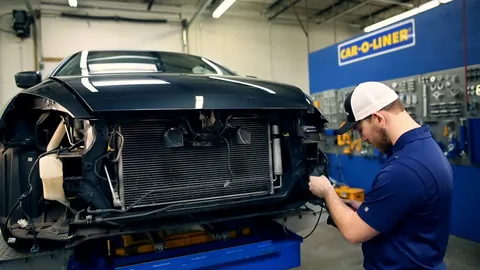
After a collision, some vehicle damage is straightforward to identify, while other repairs require detailed instructions from the manufacturer. Replacing a damaged body panel, repairing a structural rail, or working around advanced safety sensors involves more than choosing the right replacement parts.
Modern vehicles use different types of steel, aluminum, adhesives, and electronic safety systems. Manufacturers specify how these components should be repaired, where they can be replaced, and which procedures are required.
Understanding which collision repairs depend on OEM procedures helps Los Angeles drivers evaluate repair estimates and understand why two seemingly similar repairs can require different approaches.
Why Are OEM Repair Procedures Important?
OEM repair procedures are manufacturer-issued instructions for inspecting, repairing, and replacing vehicle components after damage. These instructions cover material identification, permitted repair methods, attachment locations, approved replacement procedures, and required inspections.
For example, a repair method permitted on one vehicle’s rear rail is not automatically approved for another model. The repair plan must reflect the exact vehicle, model year, construction materials, and location of the damage.
1. Structural Sectioning and Frame Repairs
Structural sectioning involves removing a damaged portion of a structural component and installing a replacement section at an approved location. Manufacturers establish where sectioning is permitted, which joints are acceptable, and how the replacement section must be attached.
This is particularly important for front and rear rails, rocker panels, pillars, and reinforced body sections. Some components require complete replacement rather than partial sectioning. For example, I-CAR’s Ford structural sectioning guidance explains that sectioning is permitted only when supported by vehicle manufacturer repair information.
When collision damage affects structural components, our auto structural repair services focus on assessing the damage and following the applicable manufacturer repair requirements.
2. Body Panel Repair and Replacement
Not every damaged body panel can be repaired using the same techniques.
A dented door skin, crushed quarter panel, or damaged rocker panel requires an assessment of the material, damage location, and permitted repair methods.
OEM instructions help determine whether technicians can straighten the existing panel or need to replace it.
They also specify replacement boundaries, factory seam locations, and attachment methods when applicable.
For Los Angeles drivers seeking collision repair services, this explains why a repair estimate must account for more than the visible size of a dent.
3. Welding, Riveting, and Adhesive Bonding
Modern vehicle bodies are assembled using different joining methods, including resistance spot welding, MIG welding, structural adhesives, rivets, and combinations of these methods.
The correct method depends on the vehicle’s design and the components being joined.
For example, a manufacturer can specify different welding locations or require adhesive bonding as part of a panel replacement procedure.
Technicians must also follow the manufacturer’s instructions for equipment, materials, joint preparation, and installation.
Using a familiar joining technique without checking the vehicle-specific requirements is not an appropriate substitute for the documented procedure.
4. Aluminum and Mixed-Material Body Repairs
Vehicles constructed with aluminum and steel require careful material identification before repairs begin. Aluminum behaves differently from steel when exposed to heat or straightening forces. Mixed-material construction also requires attention to approved joining methods and separation of dissimilar metals.
Manufacturer procedures establish repair limitations, permitted techniques, and replacement requirements for specific components. A repair that is acceptable on a conventional steel panel is not necessarily approved for an aluminum structural component.
This makes material identification and OEM repair information essential when determining how collision-damaged panels should be restored.
5. Corrosion Protection After Panel Replacement
Collision repairs involving cutting, welding, grinding, or replacing metal panels can disturb the vehicle’s original corrosion protection.
Manufacturers specify where protective materials must be restored after repairs. Depending on the location, these include cavity wax, seam sealer, protective coatings, and designated adhesives. According to I-CAR’s corrosion protection guidelines, restoring these materials is an important part of the collision repair process.
For example, replacing a quarter panel can expose interior seams and enclosed cavities that require protection before the repair is complete. These operations are not always visible after refinishing, but they remain part of the manufacturer’s repair requirements.
6. Airbag and Seat Belt System Repairs
When an accident activates airbags or seat belt pretensioners, the repair plan must include the affected restraint system components. Vehicle manufacturers provide instructions for replacing deployed airbags, inspecting relevant sensors, evaluating seat belt assemblies, and addressing electronic control modules.
The requirements vary by vehicle and deployment conditions.
Replacing the visible airbag alone does not establish that the restraint system is ready for use. Related components must be evaluated according to the applicable OEM procedures.
7. Diagnostic Scanning and ADAS Calibration
Advanced Driver Assistance Systems (ADAS) rely on cameras, radar sensors, and electronic modules to support features such as lane assistance, automatic emergency braking, and blind-spot monitoring. Collision damage and certain repair operations can affect these systems.
Manufacturers specify when diagnostic scans, sensor calibration, or other verification procedures are required. For example, replacing or repositioning a component near a radar sensor can trigger additional repair instructions.
I-CAR explains the difference between diagnostic scanning and calibration. A scan identifies recorded system faults, while calibration addresses the required positioning or initialization of specific systems.
The necessary procedures depend on the vehicle’s equipment and the repairs performed.
How Can You Confirm That OEM Procedures Are Being Followed?
Before approving a collision repair estimate, ask whether the repair plan has been developed using current manufacturer information for your specific vehicle. You can also ask how the collision center determines which components require replacement, whether structural sectioning is permitted, and which diagnostic or calibration procedures apply.
For additional information about manufacturer-approved repair programs, read our guide to what OEM-certified collision repair means for car owners.
Schedule OEM-Certified Collision Repair in Los Angeles
Collision repairs involving structural components, panel replacement, specialized joining methods, and electronic safety systems require careful planning.
At Hyperion Collision Center, we follow applicable manufacturer repair procedures and hold OEM certifications for select vehicle brands, including BMW, Mercedes-Benz, Ford, Nissan, Infiniti, Hyundai, Kia, Alfa Romeo, and General Motors.
Explore our OEM certifications to learn more about our manufacturer-specific repair programs.
Contact Hyperion Collision Center to schedule a collision damage assessment in Los Angeles. We assist customers with insurance claims and out-of-pocket repairs, helping establish an appropriate repair plan based on the vehicle and extent of the damage.