

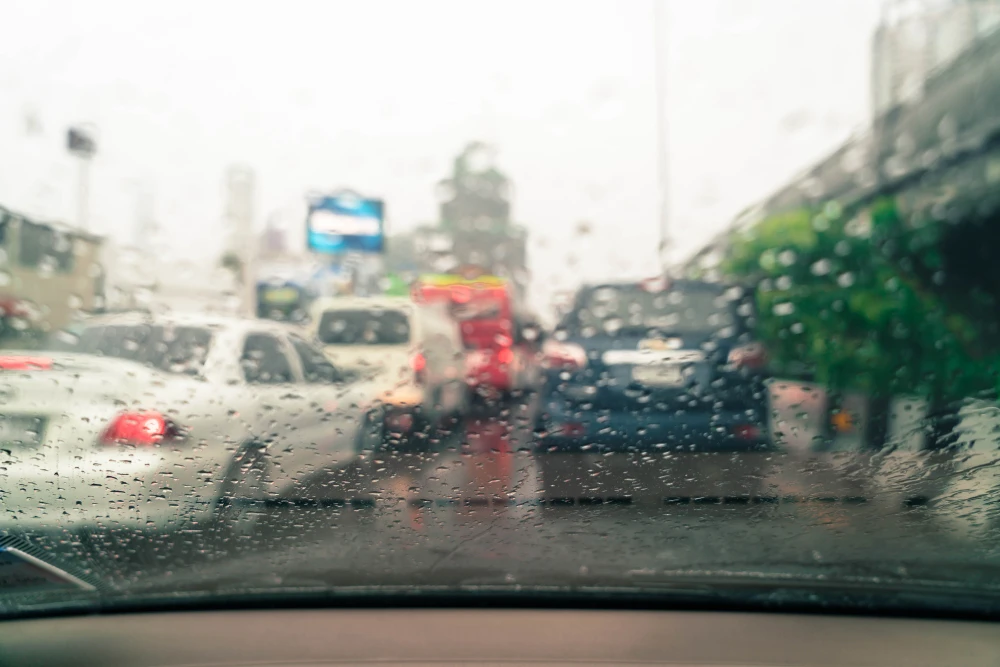
What makes driving in Los Angeles rain risky? The first shower after a dry spell can turn pavement slick, while spray, glare, and pooled water make it harder to see, steer, and stop. In busy freeway traffic or at a city intersection, those changes can quickly turn a normal slowdown into a rear-end, sideswipe, or curb collision. Here is how the main rainy season driving hazards in Los Angeles lead to crashes and what drivers can do about them.
The first rain leaves roads especially slippery
A light shower can be enough to change how a vehicle handles. After a dry stretch, water mixes with oil and dust left on the pavement. The California Driver’s Handbook specifically advises drivers to slow down at the first sign of rain, especially after hot, dry weather.
Picture a driver turning off a major Los Angeles street as the first drops begin. Braking or turning at the same speed as on dry pavement leaves less room for a mistake. A slide through the turn can end at a curb, another car, or a roadside object. Ease off the accelerator before the turn and leave more room to brake.
Less traction means more space is needed to stop
Rain lowers available tire grip, so an abrupt stop in freeway traffic is harder to manage. A short following gap that feels comfortable on a dry commute can end in a rear-end collision when vehicles brake suddenly ahead. The California Highway Patrol’s weather driving guidance tells drivers to slow down, leave extra distance, and brake gently in bad weather.
Look farther ahead for brake lights and build in extra following space before traffic slows. At intersections, begin reducing speed earlier instead of waiting for the stop line. These adjustments give you more time to respond when the vehicle ahead stops or someone enters your path.
Standing water can cause hydroplaning
Hydroplaning happens when tires ride on water rather than gripping the road. Steering and braking response can drop suddenly, particularly where water collects in a lane or near a roadway edge. The California DMV’s hydroplaning guidance advises drivers to slow down, steer around standing water when it is safe, and avoid sudden braking if hydroplaning begins.
A driver who changes lanes quickly around a puddle can also lose traction during the maneuver. Slow down before reaching pooled water and make smooth steering inputs. If the vehicle begins to hydroplane, ease off the accelerator, keep the wheel steady, and let speed fall gradually. If a street is flooded and the water depth is unclear, choose another route instead of driving through it.
Prepare your vehicle for the next storm
Before the next storm, check tire tread and inflation against your vehicle’s specifications. Tires in poor condition leave less margin when water builds on the road. Check that wipers clear the glass and that the washer reservoir is filled, too. These are preparation steps recommended in the California Highway Patrol’s bad-weather checklist; they do not replace slowing down once rain begins.
Rain, spray, and glare hide developing hazards
Heavy rain can obscure lane markings, pedestrians, cyclists, and stopped traffic. Spray from trucks and reflections from wet pavement can make a night drive harder still. Reduced visibility increases the chance of a late reaction, a sideswipe during a lane change, or a collision with a vehicle stopped ahead.
Turn on low-beam headlights, use wipers and the defroster, and slow to a speed that lets you stop within the distance you can see. These steps follow the California Driver’s Handbook’s advice for rain and poor visibility. If visibility becomes too limited to continue safely, find a safe place off the roadway and wait for conditions to improve.
What to do if a rainy-day collision damages your car
First, move to a safe location if you can and seek emergency help when anyone is injured or traffic is at risk. Document the scene and visible damage when it is safe. Even a curb strike or low-speed impact can leave damage that is not obvious from the outside; our guide to hidden damage after a collision explains the signs worth noting.
If a wheel looks out of position, the vehicle pulls, fluid is leaking, or warning lights appear after impact, avoid driving it until it has been assessed. Our Los Angeles collision repair services cover accident-related body and structural damage. If you plan to file a claim, see how we provide insurance claim assistance repairs. Contact Hyperion Collision Center to request a collision damage assessment and discuss the next step for your vehicle.